Know your project again.
Your agents build it. Remnus turns their work into pages and dashboards you can actually read, so you stay in command.
Free to start, no card needed. Open source.
Start right in your agent
Paste this into Claude Code, Codex or Cursor.
- 1Your agent installs it
- 2You sign in once
- 3Your project gets mapped
- Claude Code
- Cursor
- Codex
- Windsurf
- ChatGPT
 Antigravity
 Continue
400 commits in, can you still explain how your project works?
Agents now write code faster than anyone can read it. The gap between the code that exists and the code anyone actually understands has a name: comprehension debt. Every week of agent work makes it bigger.
Reading diffs
Shows every line that changed. Never shows what the project became.
Lines, no picture
Chats and hand-written docs
The agent explains itself, then the session closes. Docs go stale the week you write them.
Gone by Friday
Remnus
The agents doing the work keep a readable picture of the project up to date. You read it, correct it and approve it.
Current, and yours
Two minutes to see your project clearly.
No new habits. Your agent does the setup, you read the result.
- 1
Hand it to your agent
Paste the prompt above into your agent. It runs this command in your repo and you sign in once in your browser. No token to copy, nothing of yours overwritten.
$npx remnus initUsing another MCP client? Connect it from the app.
- 2
Let your agent explain it
It reads the codebase and builds the first map: overview, decisions, architecture, backlog and risks. From then on, every task keeps it current.
12Open4Done3Decisions - 3
You have the final say
Agents propose, you decide. Every agent edit is marked and logged, so you can approve it, fix it or roll it back.
- Line tool moved to DoneRestore
- Created Undo history plan5 min ago
A map of your project, written by the agents that build it.
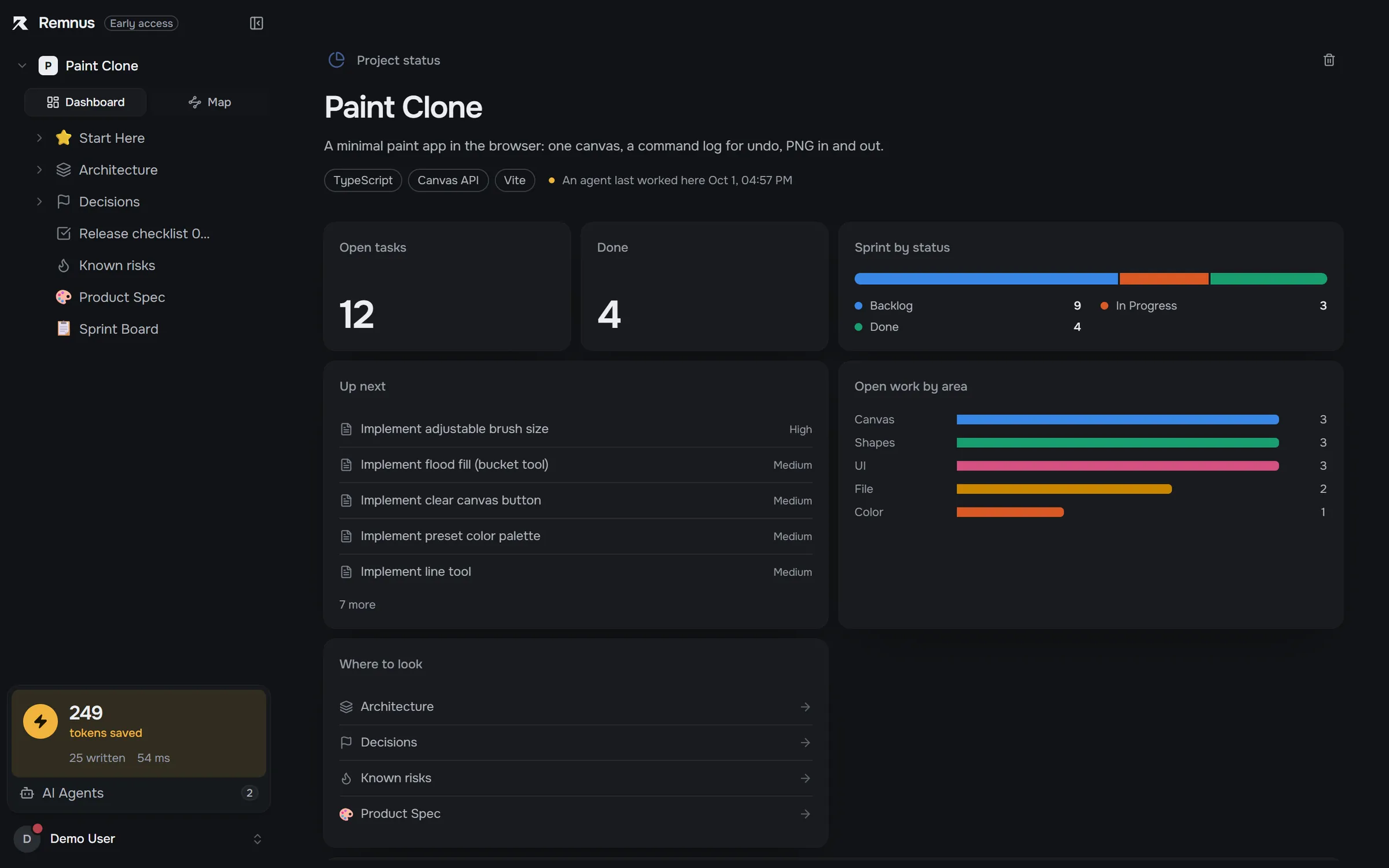
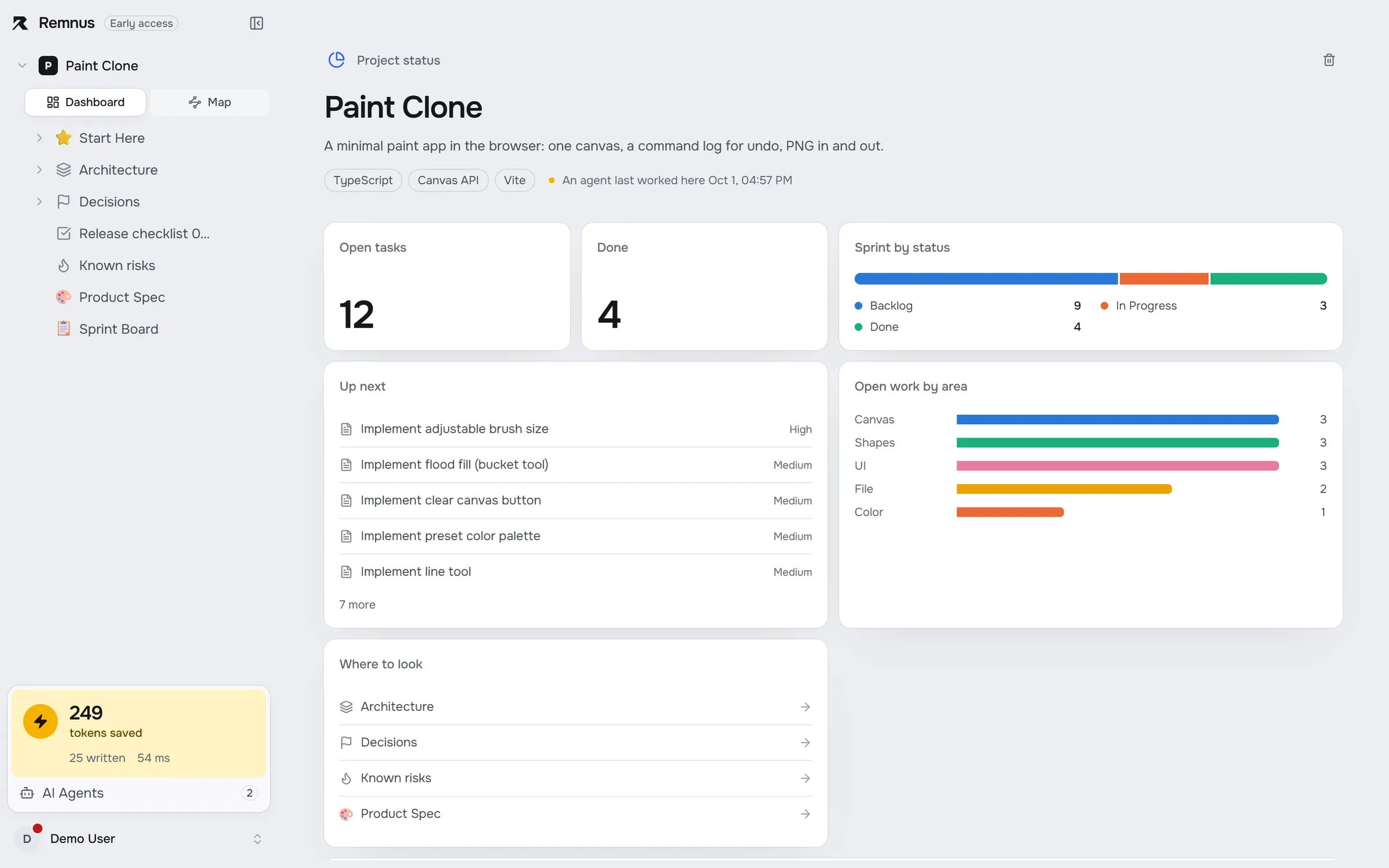
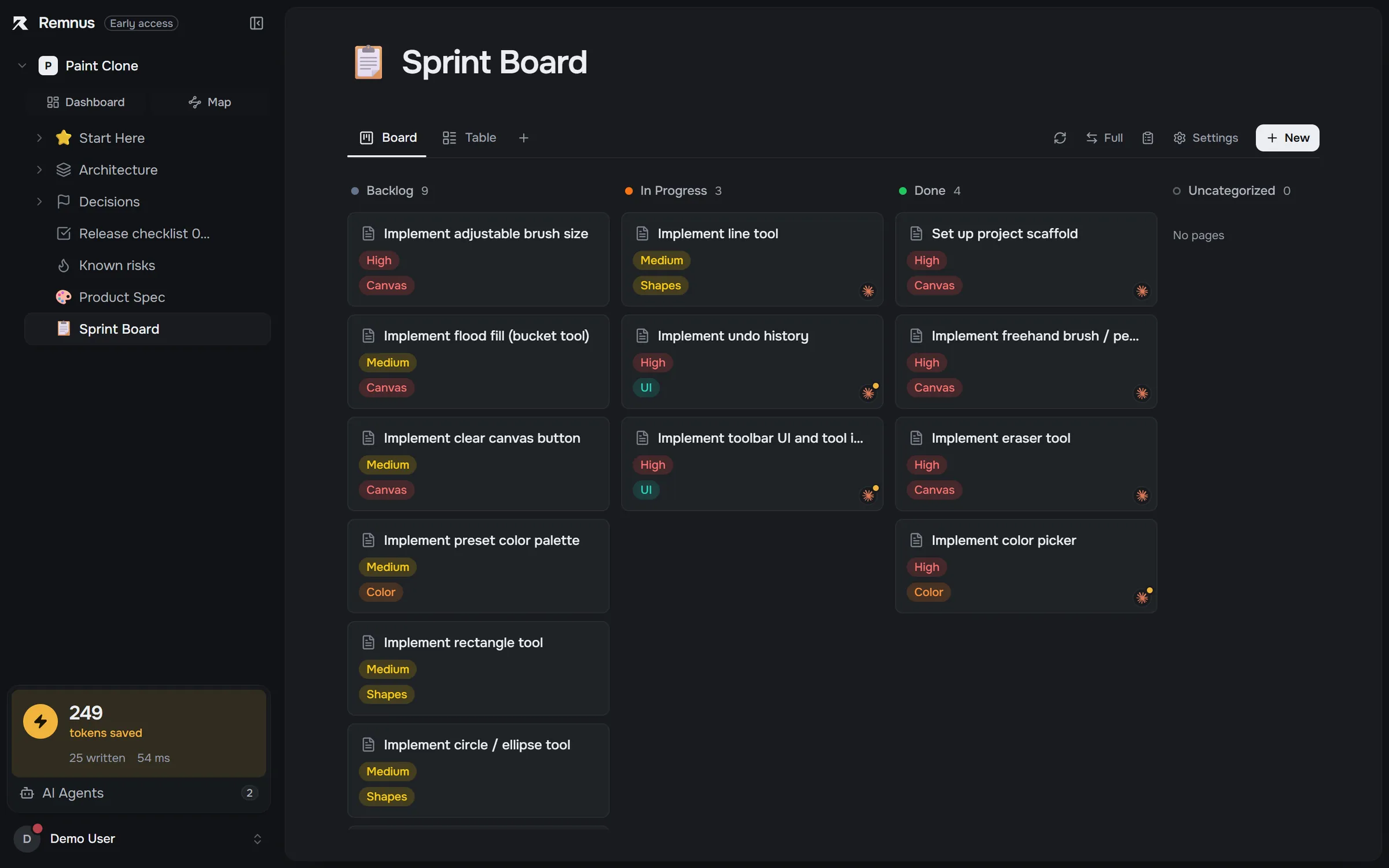
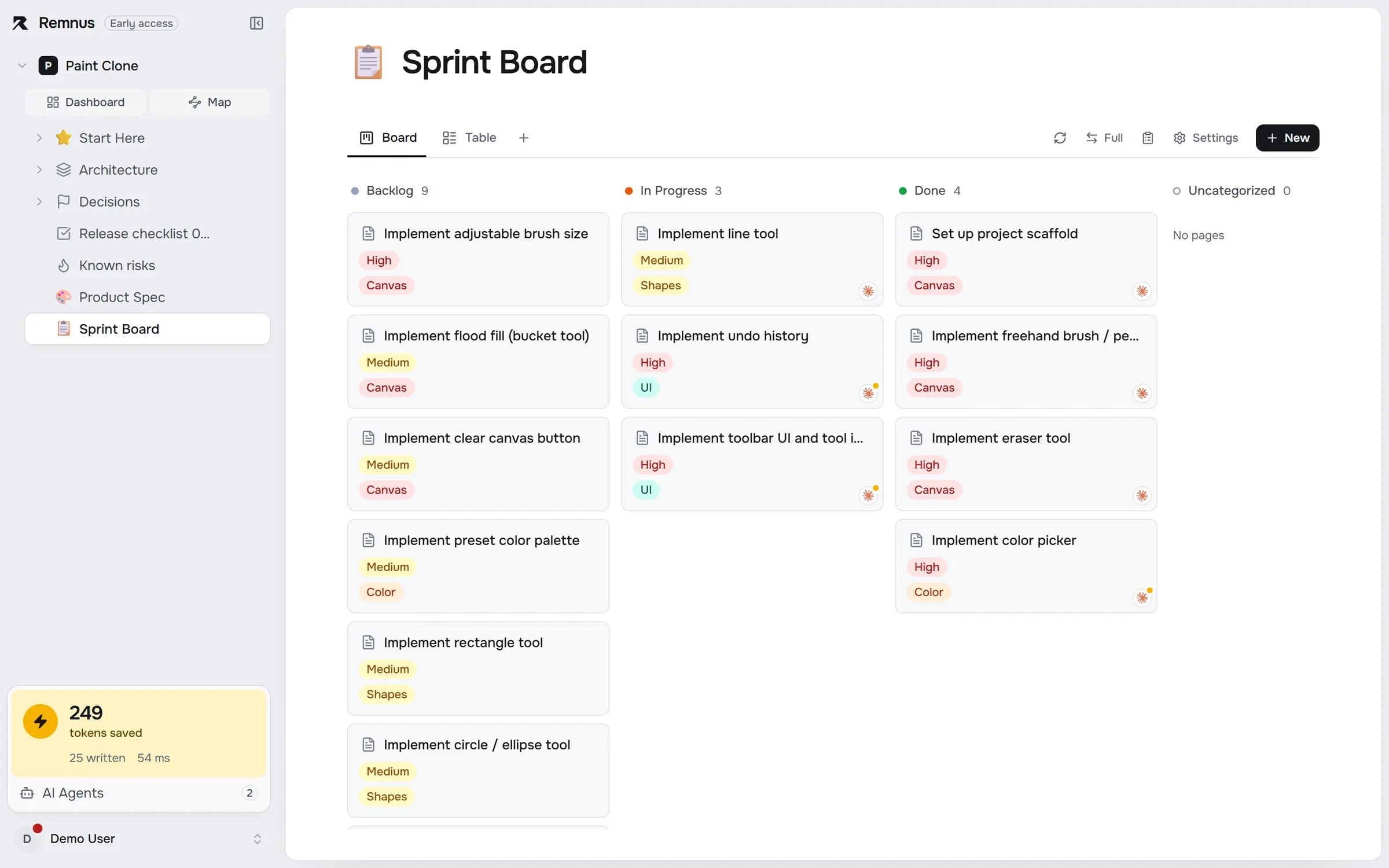
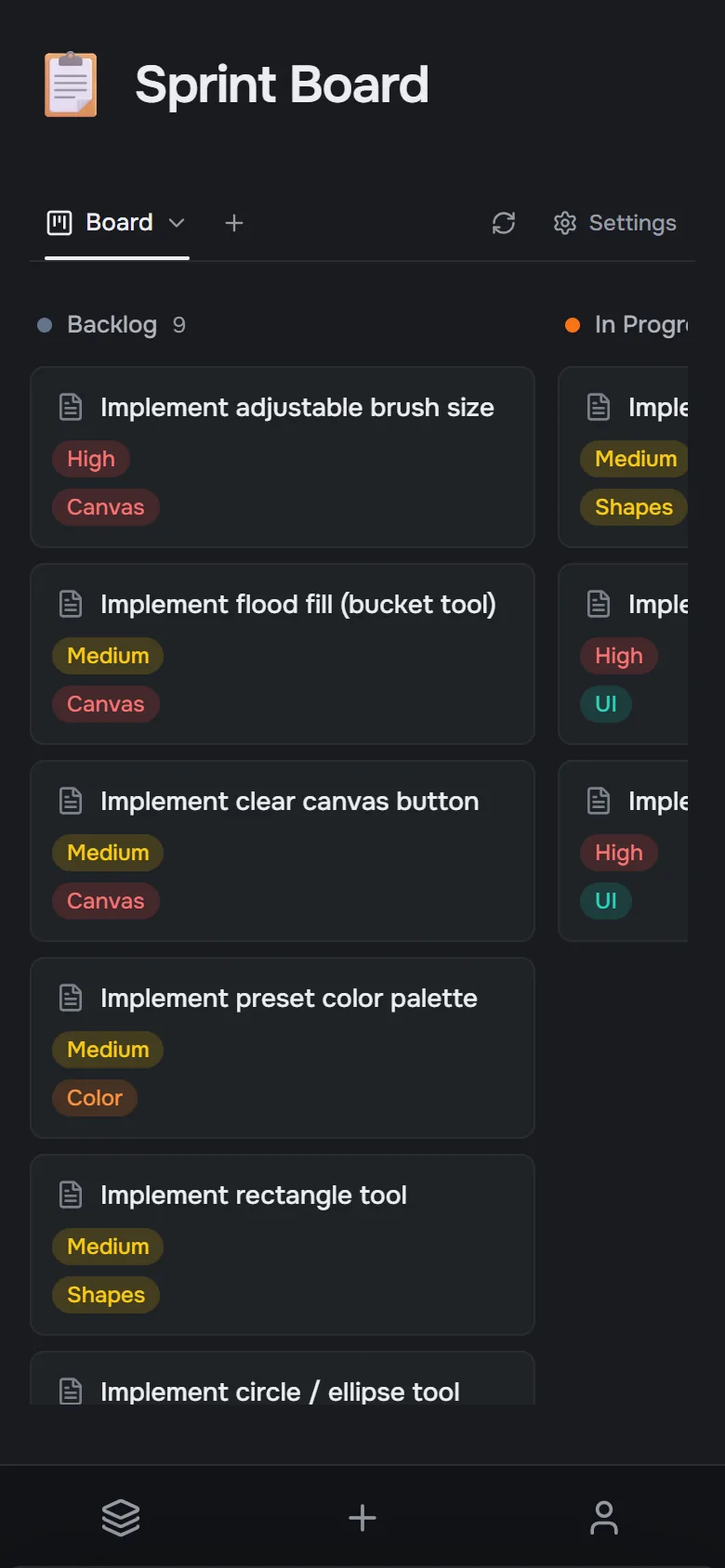
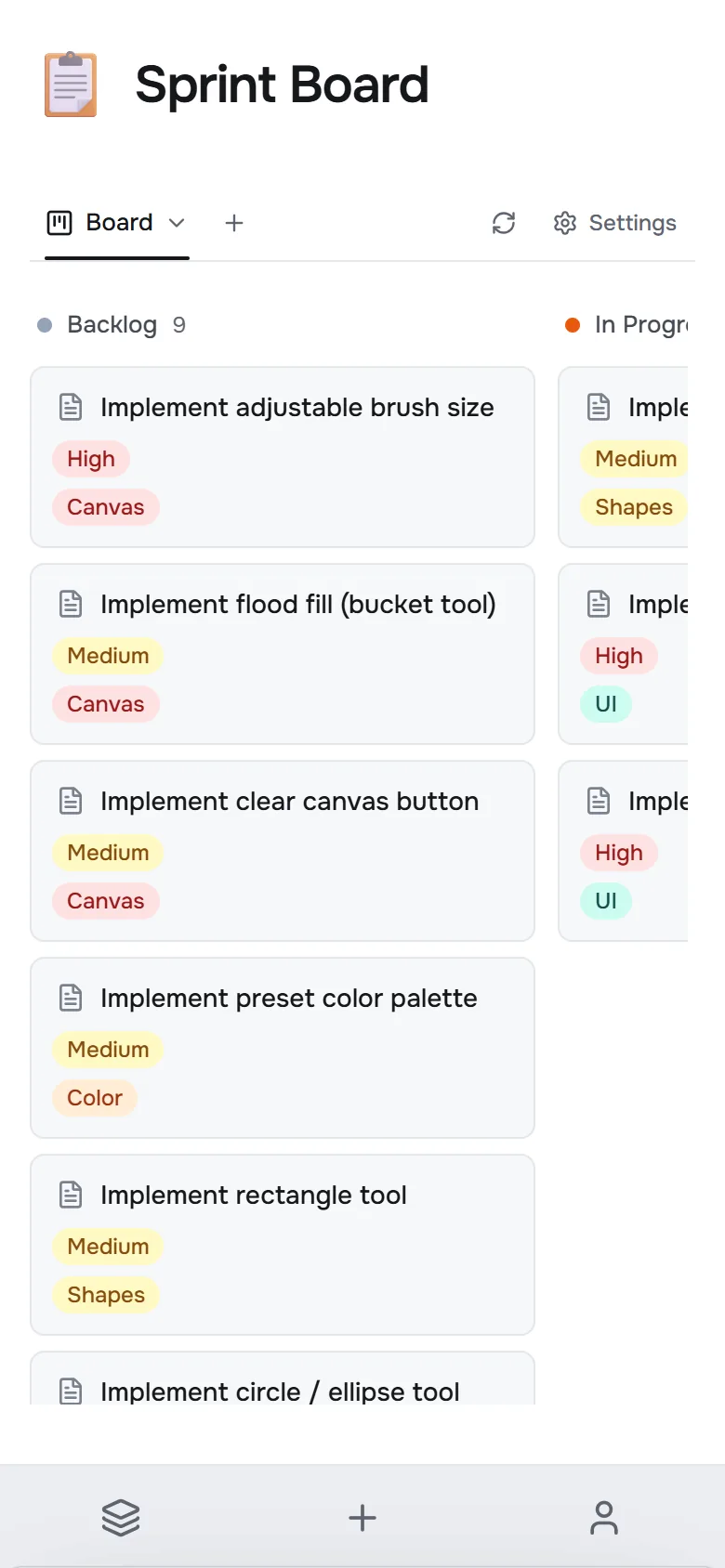
Real screens from a project an agent keeps up to date. Every page shows which agent wrote what, and when.
The whole week in two minutes on a Monday morning: your agent builds a live dashboard in one call and keeps it current.
Same work, 84% fewer tokens than an agent that reads everything.
We measured one real working session twice: once with the agent reading every page, every board column and whole pages, and once the Remnus way, with a map, outlines and only the fields it asks for.
- Find their way around
- 1,379 tokens136 tokens
- Check the board
- 3,706 tokens632 tokens
- Read one page
- 655 tokens133 tokens
- One working session
- 5,740 tokens901 tokens
That is 6 times more room in the context window for the actual work.
How we measuredWhat it saves you
The measured session above, times your sessions and the price you pick. Your workspace will differ.
Use whichever agents you like. You still get one picture.
Claude Code, Codex, Cursor and anything that speaks MCP write into the same map, and you can see who did what.
- 28 MCP tools
- Anything you can do in the app, your agent can do too, with the same permissions.
- The right context
- Agents get the pages that matter for the task within a token budget, not the whole workspace.
- Everything on the record
- Every agent read and write is logged with who, what and when. Tokens are read or write, and you can revoke them at any time.
- Open source
- AGPL-3.0. See exactly what happens to your content, or run it on your own server.
Free to start. Flat pricing for teams.
Priced per team, not per agent or seat. Self-hosting is free.
- Up to 2 members
- 2 connected AI agents
- Up to 5 members
- 5 connected AI agents
- Up to 15 members
- Unlimited AI agents
- Unlimited members
- SSO & SCIM
Questions, answered.
Does Remnus read my code?
Your own agent keeps reading your code on your own machine, as it already does. Remnus only receives what the agent writes into the workspace: decisions, notes and status. Your repository never leaves your machine.
How do I know the agents keep the map current?
Every connected project tells its agents to prepare context before meaningful work and to write down decisions, gotchas and status changes as they happen. Every update shows up in the audit log, so a quiet week shows up too.
What does npx remnus init change in my repo?
It adds .mcp.json, a .remnus folder whose token file stays out of git, a short marked section in AGENTS.md or CLAUDE.md, and a session hook for Claude Code. Existing files are edited in place, never overwritten.
Which agents does it work with?
Claude Code, Codex, Cursor, Windsurf, Antigravity and any client that supports remote MCP.
Can my team or my client see it?
Invite teammates into the project's workspace, or publish any page as a read-only link.
Can I host Remnus myself?
Yes. Remnus is open source under AGPL-3.0. Point the CLI at your own server with --server.
Let your agents keep building. Stay in command.
Paste one prompt, sign in once, and your project is readable again. Start free, or look around the demo first.